
The Hidden Costs of Active Investing: What They Don't Tell You
The true price of trying to beat the market.
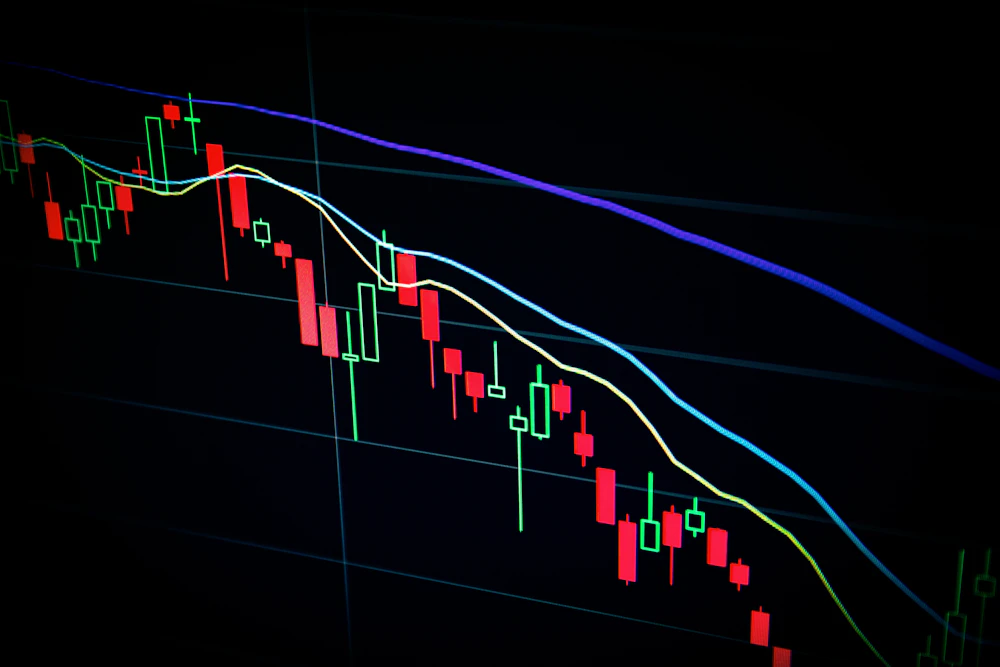
The allure of active management promises control and superior returns—but the reality often tells a different story
Introduction: The Allure and the Sobering Reality
The pitch is seductive: "Why settle for average market returns when you can beat the market?" This promise has fueled the trillion-dollar active investment industry for decades. The fantasy of picking winning stocks, timing the market perfectly, and achieving wealth beyond what passive investing can offer has an undeniable appeal. It speaks to our desire for control, our belief in exceptionalism, and our natural optimism.
But behind the glossy brochures, charismatic fund managers, and impressive backtested returns lies a less glamorous truth—one that costs investors billions annually while delivering subpar results for most. The hidden costs of active investing form a complex web of financial, psychological, and temporal expenses that systematically erode returns, often without investors even realizing it.
Key Data Point
Consider this sobering data point from decades of research: Over 15-year periods, approximately 92% of active fund managers fail to beat their benchmark indexes after fees. The remaining 8% who succeed rarely do so consistently, making them nearly impossible to identify in advance.
This article isn't about declaring active investing "wrong" or passive investing "right" in absolute terms. Rather, it's a forensic examination of the true costs—both visible and hidden—that accompany the pursuit of market-beating returns. By understanding these costs in their entirety, you can make more informed decisions about where to allocate your most precious resources: your money, your time, and your mental energy.
The Fee Pyramid: The Visible and Invisible Costs
When most investors think about the costs of active management, they typically consider the stated expense ratio—the annual fee charged by the fund. But this is merely the tip of a much larger cost iceberg. The complete fee structure of active investing forms a pyramid with multiple layers, each chipping away at your potential returns.
Layer 1: The Obvious Costs (Management Fees)
The most transparent layer consists of management fees, typically ranging from 0.5% to 2% annually for actively managed funds. While these percentages may seem small, their impact compounds dramatically over time. A 1% annual fee on a $100,000 portfolio doesn't sound like much until you realize that over 30 years, assuming a 7% annual return, that "small" fee costs you approximately $100,000 in lost growth.
But the stated expense ratio is just the beginning. Many actively managed funds charge additional fees:
- 12b-1 fees: Marketing and distribution expenses (0.25-1% annually)
- Sales loads: Front-end (when you buy) or back-end (when you sell) commissions (typically 3-5%)
- Account maintenance fees: For accounts below certain thresholds
These fees create an immediate performance hurdle. An active fund charging 1.5% annually must outperform its benchmark by at least that amount just to break even—before considering any of the other hidden costs.
Layer 2: The Transaction Costs

High-frequency trading and constant portfolio turnover generate significant hidden costs that eat into returns
Active management necessitates frequent buying and selling—what professionals call "portfolio turnover." Each transaction incurs costs that rarely appear in the expense ratio:
- Bid-ask spreads: The difference between the buying price and selling price of a security
- Market impact costs: Large trades move prices against the trader
- Commission costs: While many brokerages now offer "free" trades, institutional traders still pay significant commissions
The average actively managed U.S. equity fund has a turnover rate of approximately 85% annually, meaning it replaces most of its portfolio each year. Academic studies estimate these transaction costs add 0.5% to 1.0% in additional annual expenses—effectively doubling the stated expense ratio in many cases.
A landmark study by Edelen, Evans, and Kadlec (2007) quantified these hidden trading costs across 1,758 U.S. equity funds over 12 years. They found that transaction costs averaged 1.44% annually, with higher costs correlating with higher turnover and poorer performance.
Layer 3: The Tax Inefficiency
Active management's most insidious cost may be its tax inefficiency. Every time a fund manager sells a security at a profit within a taxable account, it generates capital gains taxes that get passed on to investors. This creates what's known as "tax drag"—the reduction in after-tax returns compared to pre-tax performance.
Consider two hypothetical funds, both returning 8% annually before taxes:
- Active Fund: 85% turnover, generates annual capital gains distributions
- Passive Index Fund: 5% turnover, minimal annual distributions
Over 30 years in a taxable account, the tax difference can be staggering. Assuming a 20% capital gains rate, the active fund might deliver 40% less after-tax wealth than the index fund, even if their pre-tax returns were identical.
This tax inefficiency is particularly problematic because:
- Investors have no control over when gains are realized
- Taxes are due annually, reducing the power of compounding
- Even tax-loss harvesting strategies often fail to offset the constant realization of gains
Tax-Adjusted Reality
The most damning evidence comes from Morningstar's research: After adjusting for taxes, less than 5% of actively managed funds beat their passive counterparts over 10-year periods in taxable accounts.
🔗 Deepen Your Investment Knowledge
Building a solid investment foundation requires understanding key principles. Explore these related frameworks:
Core Principle: Historical Context
Understanding market patterns helps avoid costly timing mistakes in active investing.
Core Principle: Strategic Diversification
Proper asset allocation often matters more than individual security selection.
Core Principle: Focus on What You Control
Increasing your savings rate through higher earnings often provides better returns than trying to beat the market.
The Performance Gap: Why Most Active Funds Underperform
The theoretical case for active management seems reasonable: Skilled professionals with superior research, technology, and information should be able to identify mispriced securities and generate alpha (excess returns). The empirical evidence, however, tells a different story—one of systematic underperformance that persists across markets, time periods, and fund categories.
The Evidence Mounts: Decades of Data
The SPIVA (S&P Indices Versus Active) scorecard provides perhaps the most comprehensive long-term evidence. Their 2023 year-end report revealed that:
- 88.5% of U.S. large-cap funds underperformed the S&P 500 over 15 years
- 94.3% of U.S. small-cap funds underperformed over 15 years
- 86.8% of international equity funds underperformed over 15 years
— William Sharpe, Nobel Laureate
The Survivorship Bias Problem
One of the most deceptive aspects of active fund performance data is survivorship bias—the tendency for unsuccessful funds to disappear while successful ones remain. When you look at current fund offerings, you're seeing only the survivors, not the full picture of all funds that existed.
Morningstar's research indicates that approximately 4% of equity funds disappear each year, mostly through mergers or liquidations. These disappearing funds typically underperformed before their demise. When researchers account for this survivorship bias, the already-poor performance figures become even worse.
A comprehensive study by Professor Hendrik Bessembinder found that between 1926 and 2019, just 4% of listed companies accounted for all net wealth creation. The remaining 96% collectively generated returns roughly equal to Treasury bills. This creates a needle-in-a-haystack problem for active managers: They must consistently identify that tiny percentage of exceptional companies while avoiding the majority that destroy value.
The Scale Problem: Diminishing Opportunities
As funds grow larger, their ability to generate alpha diminishes due to:
- Market impact: Large trades move prices
- Limited opportunities: Fewer mispriced securities of sufficient size to matter
- Bureaucratic inertia: Larger organizations become less agile
The "sweet spot" for active management appears to be between $100 million and $1 billion in assets under management. Beyond that, the structural challenges often outweigh any skill advantages. Yet the most successful funds—precisely those that investors flock to—typically grow well beyond this range, creating what researchers call "the paradox of scale."
The Behavioral Tax: Emotional Trading Costs

Emotional decision-making during market volatility creates substantial "behavioral taxes" that compound over time
While financial costs can be quantified with some precision, the behavioral costs of active investing represent a more subtle but equally damaging category of expenses. These costs stem from psychological tendencies that lead investors to make systematic errors in judgment and timing.
The Performance-Chasing Cycle
Active investing encourages what researchers call "the search for alpha," which often manifests as performance chasing. Investors pour money into funds after strong performance periods and withdraw after weak ones—a pattern that consistently reduces returns.
DALBAR's Quantitative Analysis of Investor Behavior (QAIB) has tracked this phenomenon for decades. Their 2023 report found that the average equity fund investor underperformed the S&P 500 by approximately 4.5% annually over 20 years. This "behavior gap" exceeded even the fee gap, suggesting that poor timing decisions cost investors more than high fees.
The psychology behind this is understandable but costly:
- Recency bias: Overweighting recent performance
- Confirmation bias: Seeking information that confirms desired narratives
- Herd mentality: Following what "everyone else" is doing
Overconfidence and Overtrading
Active management fosters an illusion of control that can lead to excessive trading. Terrance Odean's seminal research at UC Berkeley found that the most active traders underperform by approximately 6.5% annually compared to less active counterparts.
This "overtrading penalty" stems from several factors:
- Transaction costs: Each trade has a cost, however small
- Poor timing: Individual investors typically buy high and sell low
- Tax consequences: Realizing short-term gains at higher tax rates
The most striking finding: Men trade 45% more than women and underperform by 1.4% annually as a result—a penalty Odean attributes to greater overconfidence among male investors.
The Attention Economy Cost
Active investing requires constant attention to markets, news, and portfolio movements. This attention comes with psychological costs:
- Anxiety: Constant monitoring increases stress
- Opportunity cost: Time spent watching markets could be spent elsewhere
- Decision fatigue: More decisions lead to poorer decisions over time
A study published in the Journal of Finance found that investors who checked their portfolios least frequently earned higher returns than frequent checkers, likely because they avoided the temptation to make emotion-driven changes during market fluctuations.
The Time Cost: Research and Monitoring Hours Quantified
When evaluating investment approaches, we rarely account for the most finite resource of all: time. Active investing demands substantial time commitments for research, monitoring, and decision-making—time that could be invested elsewhere.
The Research Burden
Let's quantify the time cost of a serious DIY active investing approach:
- Weekly market analysis: 2 hours
- Stock research (individual companies): 5 hours
- Portfolio review and rebalancing: 1 hour
- Financial news consumption: 3 hours
- Total weekly commitment: 11 hours
That's 572 hours annually—equivalent to over 14 work weeks. Even using a more conservative estimate of 5 hours weekly, that's still 260 hours annually.
Now consider the opportunity cost. If those 260 hours were instead spent:
- On career development: Potentially leading to promotions or higher income
- On a side business: Generating alternative income streams
- With family: Improving relationships and quality of life
- On health: Reducing medical costs and increasing longevity
The value of time becomes particularly apparent when we calculate an hourly "wage" for active management. Suppose your active approach generates an additional 0.5% annually on a $500,000 portfolio ($2,500) but requires 260 hours of work. Your hourly rate becomes $9.62/hour—likely far below what you could earn deploying that time elsewhere.
The Compounding Problem of Decision Fatigue
Each investment decision requires mental energy that depletes a finite cognitive resource. Roy Baumeister's research on ego depletion demonstrates that decision-making fatigue leads to:
- Poorer quality decisions later in the day
- Decision avoidance (procrastination)
- Simplistic thinking and increased reliance on heuristics
For active investors, this means the 20th stock analysis of the week is likely to be less rigorous than the first. The cumulative effect of hundreds of minor decisions creates a cognitive tax that reduces overall decision quality.
The Learning Curve Consideration
Active investing requires developing expertise in multiple domains:
- Financial statement analysis
- Industry-specific knowledge
- Macroeconomic trends
- Technical analysis
- Behavioral finance
Mastering these areas requires thousands of hours—time that could instead be spent developing expertise in your primary career, where the returns on time investment are typically higher and more certain.
When Active Management Might Make Sense: Narrow Exceptions
Despite the overwhelming evidence against active management for most investors in most situations, there are specific niches where active approaches may offer legitimate advantages. Recognizing these exceptions helps create a more nuanced understanding.
1. Inefficient Market Segments
Certain market segments exhibit persistent inefficiencies that skilled active managers might exploit:
- Micro-cap stocks: Below radar of most institutional investors
- Emerging markets: Less information transparency and analyst coverage
- Fixed income sectors: Particularly municipal bonds and high-yield corporates
- Special situations: Spin-offs, bankruptcies, regulatory changes
In these areas, information asymmetry and limited competition can create opportunities for managers with specialized expertise. However, even here, the majority of active managers underperform after fees.
2. Specialized Strategies with Structural Advantages
Some investment approaches inherently resist passive replication:
- Merger arbitrage: Profiting from announced mergers
- Convertible arbitrage: Exploiting pricing inefficiencies between convertibles and underlying stocks
- Long/short equity: Ability to profit from both rising and falling prices
- Private equity/venture capital: Access to non-public markets
These strategies typically require active management by their nature. However, they come with their own challenges: higher fees, less liquidity, and greater complexity.
3. Specific Investor Circumstances
Individual circumstances might justify active approaches:
- Tax loss harvesting: In volatile markets, active tax management can add value
- ESG/socially responsible investing: When specific exclusions or inclusions are required
- Income generation: Some retirees prefer actively managed income-focused strategies
- Behavioral accommodation: Investors who will panic during downturns might benefit from hand-holding
Even in these cases, the bar remains high. The active manager must add enough value to overcome their fees and the investor's own behavioral tendencies.
The Due Diligence Dilemma
Identifying skillful active managers in advance remains extraordinarily difficult. Past performance shows little predictive power, and the characteristics that correlate with future success—low fees, low turnover, manager ownership—describe a small minority of funds.
Buffett's Billion-Dollar Bet
Warren Buffett's famous bet against hedge funds illustrates this perfectly. In 2008, he wagered $1 million that an S&P 500 index fund would beat a selection of five hedge funds over ten years. He won decisively: The index fund returned 7.1% annually while the hedge funds averaged just 2.2%.
Conclusion: The True Value of Your Time and Peace of Mind

The greatest wealth may not be financial but psychological: the freedom to focus on what truly matters
The true cost of active investing extends far beyond the expense ratios and transaction fees that appear on statements. It encompasses:
- The financial costs: Management fees, transaction expenses, tax inefficiency
- The performance costs: Systematic underperformance relative to benchmarks
- The behavioral costs: Emotional trading, performance chasing, overconfidence
- The time costs: Hours spent researching, monitoring, and stressing
When aggregated, these costs create a substantial headwind that most investors—professional and amateur alike—cannot overcome consistently. The arithmetic is relentless: After all costs, the average actively managed dollar must underperform the average passively managed dollar.
But perhaps the most profound cost is psychological. Active investing keeps us tethered to markets, focused on short-term fluctuations, and engaged in a perpetual search for an edge that may not exist. It turns investing from a means to an end into an end in itself—a complex game that consumes our attention without necessarily improving our outcomes.
The Liberation of Simplicity
There's an alternative approach that acknowledges these costs and seeks to minimize them: building a simple, diversified portfolio of low-cost index funds; automating contributions; rebalancing periodically; and focusing your precious time and energy on activities with higher and more certain returns.
This approach recognizes that:
- Your career typically offers higher returns on time investment than stock picking
- Your health provides returns no portfolio can match
- Your relationships create wealth that transcends financial measures
- Your peace of mind has value that compounds daily
— John Bogle, Founder of Vanguard
Three Sovereignty Takeaways
- Count All the Costs: Evaluate investment strategies based on their total cost—financial, temporal, and psychological—not just their expense ratios.
- Respect the Arithmetic: The mathematical reality is that after costs, most active management must underperform. Accepting this allows you to focus on factors within your control: savings rate, asset allocation, and cost minimization.
- Value Your Attention: Your time and mental energy are scarce resources. Deploy them where they generate the highest returns, which is rarely in trying to outsmart the collective wisdom of markets.
Your First Step Toward Cost Awareness
This weekend, conduct a simple audit:
- List all investment accounts and their expense ratios
- Calculate the dollar amount you paid in fees last year
- Estimate the hours spent researching and monitoring investments
- Project these costs forward 10, 20, and 30 years
This exercise often reveals that the pursuit of outperformance has itself become a significant cost center—one that can be dramatically reduced through simplification.
The ultimate goal isn't necessarily to avoid active management entirely, but to approach it with clear-eyed awareness of its true costs. For most investors, most of the time, the evidence suggests that minimizing these costs through passive approaches leads to better outcomes—not just financially, but in the currency that matters most: a life well lived, with attention focused on what truly enriches us.


0 Comments