
What History Teaches Us About Market Cycles and Patience
Perspective from 100+ years of market data.
You check your portfolio. The numbers are red, the headlines apocalyptic. A primal fear whispers: "Sell. Protect what's left. This time is different." In that moment, you're not just an investor—you're a human confronting uncertainty, and every instinct screams for action.
Yet there exists a different voice: the calm, measured tone of history. A voice that has witnessed world wars, depressions, pandemics, and technological revolutions. A voice that says: "I have seen this before. Many times."
This article is not about prediction. It's about perspective. We'll examine over a century of market data not to forecast the next turn, but to understand the enduring pattern beneath the chaos. You'll learn to distinguish between temporary volatility and permanent loss, recognize the psychological narratives that repeat in every cycle, and discover the specific, historically-informed actions to take when fear feels most compelling.
| Emotional/Instinctive Response | Historical/Disciplined Response |
|---|---|
| "The market is crashing! I need to sell before it gets worse." | "Volatility is the price of admission for long-term returns. This is part of the cycle." |
| "Everything is different now—technology/geopolitics/debt changes everything." | "While details change, human psychology and economic cycles remain remarkably consistent." |
| Checking portfolio values daily, reacting to each movement. | Reviewing investments quarterly or annually against a long-term plan. |
| Waiting for "the bottom" or "all clear" signal to invest cash. | Maintaining consistent contributions regardless of market conditions (dollar-cost averaging). |
| Believing recent trends (bull or bear) will continue indefinitely. | Understanding that mean reversion is one of finance's few reliable tendencies. |
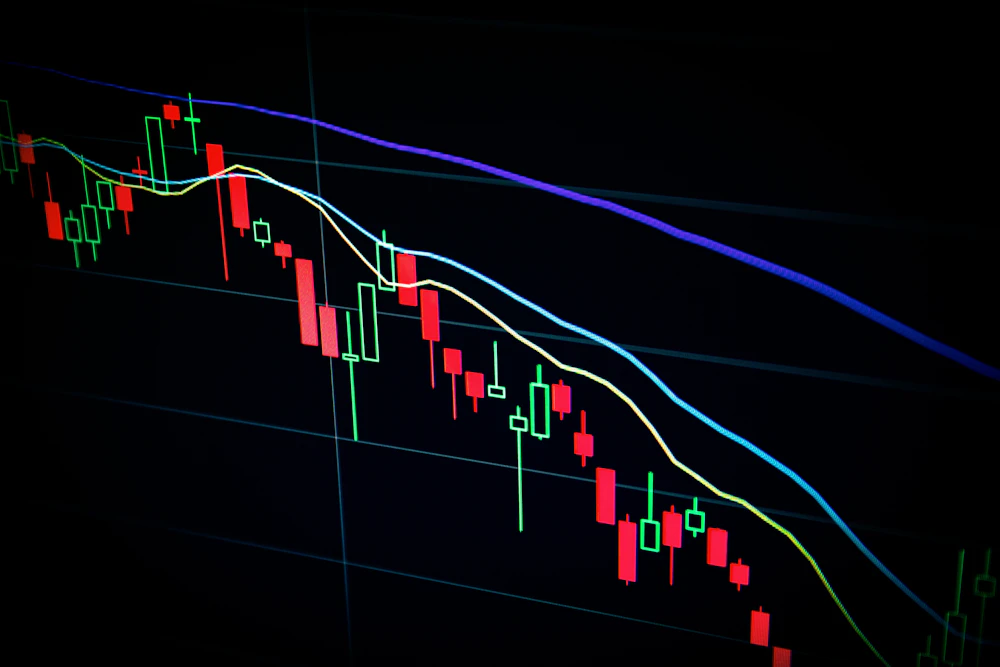
The technology changes; the human psychology driving market patterns does not. Fear and greed have powered markets for centuries.
Table of Contents
- The 4 Stages of Every Market Cycle: A Timeless Pattern
- Historical Recovery Timelines: Data from Crisis to Recovery
- The "This Time Is Different" Fallacy: Psychology Across Eras
- What to Actually Do During Downturns (The Action Plan)
- Deepen Your Long-Term Practice (Strategic Links)
- The Wisdom of Mean Reversion: A Mindset Insert
- Your Historical Perspective Framework (Conclusion)
1. The 4 Stages of Every Market Cycle: A Timeless Pattern
System/Architecture: The Four Psychological Phases
While no two cycles are identical in magnitude or duration, their structural and emotional progression is remarkably consistent.
📉 Stage 1: Accumulation (The Silent Foundation)
Market Condition: Prices are low or stagnant, often following a decline. Volume may be low. Bad news dominates headlines.
Psychological State: Pessimism & Capitulation. The public wants nothing to do with stocks. "Investing is dead" narratives emerge.
Who's Active: Informed investors, institutions, and value investors begin quietly accumulating quality assets at discounted prices.
Historical Example: Mid-1932 to early 1933 after the 1929 Crash; early 2009 after the Financial Crisis.
📈 Stage 2: Markup (The Bull Run)
Market Condition: Sustained upward trend with higher highs and higher lows. Corrections are shallow and brief.
Psychological State: Hope → Optimism → Exuberance. Early investors are rewarded. The public gradually returns, first cautiously, then enthusiastically.
Who's Active: Institutional money flows in strongly. The general public becomes increasingly active toward the end.
Historical Example: 1982-1987; 1990-2000; 2009-2020.
⚖️ Stage 3: Distribution (The Topping Process)
Market Condition: High volatility within a trading range. Prices struggle to make new highs. Divergences appear.
Psychological State: Euphoria → Complacency → Denial. Sentiment is overwhelmingly bullish, but underlying momentum falters.
Who's Active: Smart money begins quietly distributing shares to enthusiastic buyers. The public is fully invested.
Historical Example: Late 1999 to early 2000; late 2007 to early 2008.
🌀 Stage 4: Decline (The Bear Market)
Market Condition: Sustained downward trend with lower lows and lower highs. Rallies are sharp but short-lived.
Psychological State: Denial → Fear → Panic → Despair. Investors move from "buying the dip" to capitulation selling.
Who's Active: Forced selling from margin calls, fund redemptions, and emotional investors.
Historical Example: 2000-2002; 2008-2009; early 2022.
Visual Framework: The Cycle of Market Psychology

The eternal cycle: from despair to euphoria and back again. Recognizing your position in this cycle is more valuable than any stock tip.
Guiding Tenets for Cycle Navigation
Psychology Over Fundamentals (in the Short Term)
Explanation: In the short to medium term, market prices are driven more by collective investor psychology (fear and greed) than by underlying business fundamentals. Fundamentals win in the long run; psychology creates the interim volatility.
The Long-Term Impact: You stop trying to rationally explain every short-term move and instead focus on whether your investment thesis remains intact for the 5-10 year horizon.
Phase Recognition Over Timing
Explanation: Instead of trying to pinpoint exact tops and bottoms (an impossible task), learn to recognize which general phase the market is in. This informs your emotional preparedness and strategic actions.
The Long-Term Impact: You replace the anxiety of prediction with the calm of situational awareness, allowing you to follow your plan rather than your emotions.
Historical Recovery Timelines: From 1929 to 2020
The fear during a downturn is that "this will never recover." History provides the antidote: every decline has been followed by a recovery and new highs. The variable is time.
The Great Depression (1929-1932)
-89% decline from peak. Recovery to previous peak: 25 years (1954).
Contextual Note: This was the worst-case scenario, exacerbated by policy errors. A patient investor who held through the entire period and reinvested dividends would have recovered their principal by 1945—16 years, not 25.
1973-74 Bear Market (Oil Crisis, Stagflation)
-48% decline in the S&P 500. Recovery to previous peak: 7.5 years (late 1980).
Dot-Com Bubble (2000-2002)
-49% decline in the S&P 500, -78% in the NASDAQ. S&P 500 recovery: 7 years (2007). NASDAQ recovery: 15 years (2015).
Global Financial Crisis (2007-2009)
-57% decline in the S&P 500. Recovery to previous peak: 5.5 years (2013).
COVID-19 Crash (2020)
-34% decline in the S&P 500. Recovery to previous peak: 5 months.
2. The "This Time Is Different" Fallacy: Psychology Across Eras
System/Architecture: The Echoes of History
| Era | "New Paradigm" Narrative at the Peak | "Doomsday" Narrative at the Trough |
|---|---|---|
| Late 1990s | "The internet changes everything. Old valuation metrics don't apply. We're in a 'new economy' with permanently higher productivity." | "The tech wreck has destroyed capital permanently. Globalization is reversing. The US will lose its innovation edge." |
| Mid-2000s | "Home prices never decline nationally. Financial engineering has distributed risk. The 'Great Moderation' means smooth growth forever." | "The global financial system is broken. Banks are insolvent. We're entering a second Great Depression." |
| Late 2010s | "FAANG stocks are invincible. Central banks have eliminated the business cycle. Passive investing can't lose." | "COVID will permanently alter society. Inflation is dead, and we face a Japanese-style deflationary spiral." |
| Early 2020s | "Money is free forever. Digital assets and meme stocks represent a new financial system." | "Inflation is entrenched. Central banks have lost control. Globalization is dead, and deglobalization will crush profits." |
Volatility vs. Permanent Loss: Understanding the Difference
This is the most crucial distinction in investing:
📊 Volatility: The Temporary Illusion
A temporary fluctuation in the price of an asset. It is the short-term noise around the long-term trend. It feels like loss but isn't—unless you turn it into one by selling.
Example: Your $100 stock drops to $60 during a bear market, then recovers to $120 over the next few years. The drop to $60 was volatility.
💀 Permanent Loss: The Real Danger
An irrecoverable impairment of the value of an asset. This occurs when a business fails, a bond defaults, or you sell an asset during a downturn and miss the subsequent recovery.
Example: Selling your $60 stock during the bear market, locking in the $40 loss, and then watching it recover to $120. That $40 is permanent loss.
Your Job: Manage permanent loss risk through diversification and quality assessment. Endure volatility as the inevitable cost of long-term growth.

The historical tape tells one story: relentless upward progress punctuated by terrifying but temporary declines. The trendline is patience rewarded.
🔗 Deepen Your Long-Term Practice
Maintaining perspective during cycles requires more than historical facts—it requires a robust personal system. Fortify your position with these frameworks:
Core Principle: Security Before Growth
Ensure you have a cash buffer so you're never forced to sell investments at a loss during a downturn.
Core Principle: Structure Determines Outcome
Build a portfolio mix that aligns with your timeline, allowing you to weather volatility without panic.
Core Principle: Intentionality Over Reaction
Anchor your financial decisions to a long-term life plan, making market noise irrelevant by comparison.
3. What to Actually Do During Downturns (Specific Steps)
System/Architecture: The Downturn Protocol
Implement this checklist when volatility spikes:
Step 1: Execute the 'No-Panic' Ritual
Turn off the noise. Delete financial news apps from your phone for a week. Stop checking your portfolio.
Re-read your investment plan. Remind yourself of your time horizon (10+ years) and your asset allocation's purpose.
Review historical charts. Look at the long-term chart above. Visually contextualize the current drop.
Step 2: Assess, Don't Guess
Check your risk exposure. Is your emergency fund intact? Are you carrying high-interest debt that needs addressing first?
Review your allocation. Are you still within your target stock/bond/cash ranges? (This sets up Step 3).
Ask the fundamental question: "Have the long-term prospects of the businesses I own (or the funds that hold them) permanently changed, or is this a price change based on sentiment?"
Step 3: Take Calibrated Action (If Anything)
Rebalance. If your stock allocation has fallen below its target due to market declines, use this as an opportunity to buy more to bring it back to target. This is "buying low" systematized.
Continue dollar-cost averaging. If you contribute monthly to investments, do not stop. You are now buying shares at a discount.
Tax-Loss Harvest (if applicable). In taxable accounts, you can sell a security at a loss and immediately buy a similar (but not identical) one to capture the tax benefit without missing the recovery.
Step 4: The Forbidden Action
DO NOT SELL EQUITIES TO "MOVE TO SAFETY." This is the single action that turns volatility into permanent loss. History is unequivocal: staying invested through cycles is the only reliable path to capturing the market's long-term returns.

The most powerful action during a downturn is often a deliberate non-action, guided by a pre-written plan.
⚖️ The Patience Payoff
Mean reversion is the gravitational force of finance. Periods of exceptionally high returns are almost invariably followed by periods of below-average returns, and vice versa. The market's long-term average annual return is about 7% after inflation. When returns soar to 15-20%+ for several years (as in the late 1990s or post-2009), you are not witnessing a "new normal"—you are borrowing returns from the future.
Similarly, when returns are deeply negative for a period, you are not witnessing the "end of investing"—you are experiencing the painful but necessary process that restores future return potential. The investor's greatest advantage is the ability to have a longer time horizon than the market's emotional pendulum. While others are extrapolating the recent past infinitely into the future, you understand you are simply witnessing another swing of the perpetual cycle.
Reflective Question: Am I more influenced by the returns of the last 3 years or by the average returns of the last 100 years when making decisions about my portfolio?
4. The Ultimate Historical Evidence: Time in the Market vs. Timing the Market
Consider this stark data from a study by J.P. Morgan Asset Management:
An investor who remained fully invested in the S&P 500 from 1999 through 2018 would have earned:
annualized return
An investor who missed just the 10 best single days in that 20-year period saw their return drop to:
annualized return
An investor who missed the 30 best days would have had:
negative annualized return
🏛️ Build Your Historical Perspective Framework
History does not repeat, but it rhymes. Your investing lifetime will see 4-6 major bear markets and countless corrections. Each will feel uniquely terrifying in the moment. Your advantage is not in predicting them, but in recognizing their cyclical nature and having a systematic response.
You are not a passive observer of history; you are a participant in its latest chapter. By understanding the script, you can play your role with discipline rather than panic.
3-Sovereignty Takeaways
Cycles Are Eternal
The four-stage pattern of accumulation, markup, distribution, and decline has governed markets for centuries. Your position in this cycle is more important than the day's news.
Narratives Are Psychological
The stories that feel most convincing at extremes ("new paradigm," "permanent ruin") are the most reliable contrary indicators.
Time Heals All Drawdowns
Every major decline in history has been recovered, given sufficient time. The only way to lose permanently is to sell during the decline.
Your "First Stone" Step (20 Minutes)
Write your personal "Downturn Protocol" on a physical note card. Include:
- My Time Horizon: [e.g., "15+ years"]
- My No-Panic Ritual: [e.g., "Delete news apps, review long-term chart"]
- My Calibrated Action: [e.g., "Check if rebalancing is needed; continue automatic contributions"]
- My Forbidden Action: [e.g., "DO NOT SELL EQUITIES"]
Place this card in your wallet or tape it to your monitor. You have just armed your future self with historical wisdom for the next emotional storm.

Enduring structures are not those that avoid storms, but those built with an understanding of seasonal cycles. Your investment philosophy should be the same.


0 Comments