
Side Hustles That Scale: Building Income Streams That Last
Beyond quick cash—creating sustainable supplemental income.

You work your 9-5. You check your bank account. The gap between where you are and where you want to be feels permanent. So you drive for a rideshare app, deliver food, or take on freelance tasks. The extra $300 this month is real, but so is the exhaustion. And next month, you'll need to grind those same hours all over again just to stand still.
Welcome to the time-for-money trap—the treadmill most side hustles never escape.
This article isn't about making quick cash. It's about architecting supplemental income streams that grow while you sleep. We'll move from the mindset of trading hours for dollars to building income-generating assets. You'll learn to evaluate opportunities by their scalability, balance them with your main career without burning out, and discover a clear, data-driven framework for knowing when (and if) to leap from employee to founder.
Core Principle Card
Sustainable wealth is built not by working more hours, but by shifting effort from generating income directly to building systems and assets that generate income autonomously.
The Side Hustle Spectrum
Understanding the difference between gig work and scalable assets is the first step toward financial sovereignty.
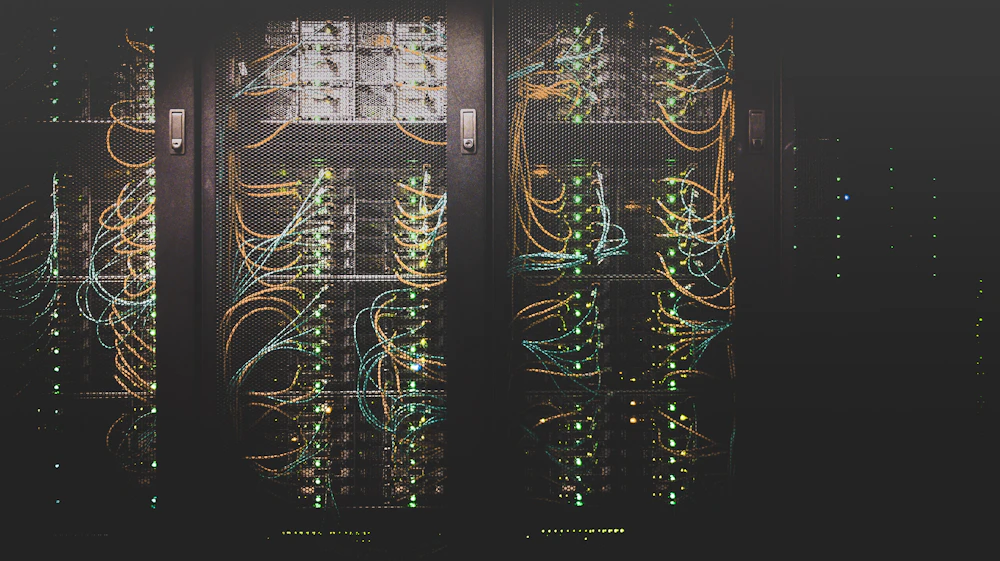
Your asset portfolio. Each one is a piece of digital real estate that can produce rent indefinitely.
Table of Contents
- Escaping the Time-for-Money Trap
- Asset-Based Hustles: The Building Blocks of Scale
- The "10x Rule" for Side Hustle Evaluation
- The Art of the Balance: Career & Side Project Synergy
- The Systems Mindset: A Philosophy Insert
- The Data-Driven Leap: When to Go Full-Time
- Your Scalable Side Hustle Blueprint (Conclusion)
1. Escaping the Time-for-Money Trap
Mindset Foundation
Shift from "How can I make extra money this month?" to "What can I build this quarter that will pay me for years?" The trap isn't the work itself; it's the lack of leverage. Leverage is the force multiplier that allows your effort to produce disproportionately large results. A scalable side hustle is a search for leverage—through technology, capital, or code.
System/Architecture: The Three Levels of Leverage
Identify where your potential side hustle falls on this hierarchy.
│
Level 3: System & Capital Leverage
│
Level 2: Product Leverage
│
Level 1: No Leverage (Time-for-Money)
│
[LOWEST SCALABILITY]
2. Asset-Based Hustles: The Building Blocks of Scale
Mindset Foundation
Stop looking for "side hustles." Start looking for problems you can solve once and sell repeatedly. Your goal is to create a "package" of value—knowledge, tools, or access—that is detached from your ongoing time.

Digital products are pure leverage—create once, sell indefinitely.
🔗 Deepen Your Foundation
A scalable side hustle requires a stable personal foundation. Before you build for others, ensure your own house is in order with these systems:
Core Principle: Clarity Before Action
Audit your finances to know exactly how much runway you have and where side hustle income should be allocated.
Core Principle: Strategic Debt Elimination
If you have high-interest debt, crushing it is the highest-return "side hustle" you can do. This framework shows you how.
Core Principle: Intentional Long-Term Planning
Align your side hustle efforts with your long-term life goals to ensure they contribute to your desired future, not just your present bank account.
3. The "10x Rule" for Side Hustle Evaluation
Mindset Foundation
Not all time spent on a side project is equal. Apply ruthless filtering to opportunities based on their potential for exponential, not linear, returns on your invested time.

Score your side hustle ideas objectively before investing time.
4. The Art of the Balance: Career & Side Project Synergy
Mindset Foundation
Your side hustle should not secretly be a second full-time job. It should be a laboratory—a place to experiment, learn, and grow in ways that often feed back into your primary career, making you more valuable, not just more tired.
⚙️ The Systems Mindset: A Philosophy Insert
The goal of a scalable side hustle is not to create a job for yourself, but to create a job for a system. In the beginning, you will do all the jobs: creator, marketer, customer service, accountant. But with each task, you must ask: "How can I systemize this so it requires less of me next time?"
This means building templates for emails, creating standard operating procedures (SOPs) for onboarding, using automation tools (Zapier, Make.com) to connect platforms, and designing products that are self-explanatory. The measure of success is not how much money you make while working, but how much money arrives while you're hiking, sleeping, or focused on your main career. You are an engineer designing a machine; your eventual aim is to be its occasional mechanic, not its perpetual fuel.
Reflective Question: What is one task I do repeatedly in my life or work that could be turned into a template, checklist, or automated workflow?
6. The Data-Driven Leap: When to Go Full-Time
Mindset Foundation
Quitting your day job based on emotion is a classic disaster. Quitting based on data is a calculated promotion. Your side hustle must prove its viability and resilience before it becomes your safety net.
Build Your Scalable Side Hustle Blueprint
The journey from trading hours for dollars to building income-generating assets is the modern path to financial sovereignty. It transforms you from a mere earner into a creator, an owner, and an architect of your own economic destiny.
Your side hustle is more than extra income; it's your personal R&D department, your skills accelerator, and your ultimate career insurance policy.

Every scalable empire begins with a single, deliberate brick. Your first digital product, your first blog post, your first email subscriber is that brick.


0 Comments