
The Side Hustle Stack: Building Multiple Income Streams That Actually Work
You check job boards, wondering if the next promotion will finally bring financial breathing room. You consider "passive income" schemes that promise riches while you sleep. Yet most side hustles feel like second jobs—more hours traded for dollars, more burnout, more complexity. What if there was a better way? What if instead of chasing singular gigs, you built an integrated system of income streams that reinforce each other, compound your skills, and create true financial resilience?
This is the power of the Side Hustle Stack. It's not about working three jobs; it's about designing one elegant system where each component supports the others. While hidden fees quietly quit from your portfolio as we discussed in The Hidden Costs of Active Investing, your income streams should be actively collaborating. Today, we move beyond piecemeal gigs to reveal the timeless principle at work: Wealth is built not from isolated efforts, but from interconnected systems where outputs become inputs for the next layer of growth. This article provides the framework to architect your personal income ecosystem.
⚖️ The Income Mindset: Scattered Efforts vs. Strategic Stacking
| Traditional Side Hustle Approach | The Stack Builder's Approach |
|---|---|
| Chasing trending gigs (Uber, TaskRabbit, surveys) | Building on your existing skills and unique combinations |
| Trading time directly for money (hourly work) | Creating assets that earn while you sleep (digital products, systems) |
| Treating each income stream as separate | Designing streams to feed each other (audience → product → community) |
| Reacting to immediate financial pressure | Building within your long-term vision framework |
| Burnout from managing disconnected efforts | Using automation principles to create efficiency |

A true side hustle stack works like interlocking gears: each component drives the others forward, creating momentum greater than any single part.
In This Exploration:
- The Skill Stacking Method: How to combine your existing abilities into unique value propositions
- The Community Economy: Turning audience into sustainable income
- Automation & Systems: Making your stack work while you sleep
- 5 Real Stack Examples: Concrete models you can adapt
Part I: The Skill Stacking Method – Your Foundation Layer
The Mindset Shift: From Specialist to Polymath Builder
The old career advice said "specialize deeply." In the digital economy, the real advantage goes to those who can combine multiple competencies into unique solutions. This isn't about being mediocre at many things, but about strategically layering skills that multiply each other's value.
The 3-Layer Skill Stack
Your primary expertise (e.g., software development, marketing, writing, design)
What turns your skill into value capture (sales, basic finance, project management)
Your unique multiplier (teaching ability + your skill, niche knowledge + your skill)
Example: A graphic designer (Layer 1) learns basic copywriting (Layer 2) and specializes in creating visuals for scientific researchers (Layer 3). This combination is far more valuable than any single skill alone.
Your most valuable next skill is usually adjacent to what you already know. Look for skills that multiply your existing capabilities rather than starting from zero.
The Long-Term Impact: Over 5-10 years, a coherent skill stack makes you virtually irreplaceable and creates multiple income pathways from the same core investment.
Digital Product Creation: The Scalability Layer
Once you have a skill stack, the next step is productizing it. Digital products turn your expertise into assets that can be sold repeatedly without additional time investment.
Digital Product Progression Path
🔗 Deepen Your Long-Term Practice
Building a skill stack requires the patience and systems-thinking. To understand how to price and package your expertise, study The Delayed Career Path which shows how seemingly unrelated experiences combine into unique value.
How non-linear experiences combine into unique value propositions.
Create an advisory team to guide your skill development and income strategy.
Strategic frameworks for career and income development over decades.

Digital product creation turns your expertise into scalable assets. One creation can reach thousands, working for you long after the initial effort.
Part II: The Community Economy – The Amplification Layer
The Mindset Shift: From Transactional to Relational Value
In the attention economy, community isn't just an audience—it's an asset class. A true community provides feedback, support, social proof, and recurring engagement that no advertising can buy.
The Community Economy Model: Free value builds trust and audience; mid-tier products serve the majority; premium offerings serve your most dedicated followers. All layers support each other.
Building Your Audience → Community Flywheel
- Content Creation: Share your skill stack through blogs, videos, podcasts
- Audience Building: Capture emails, grow social following
- Engagement: Respond, ask questions, build relationships
- Product Introduction: Offer solutions to problems you've identified
- Community Formation: Bring buyers together (forums, groups, events)
- Co-Creation: Involve community in future products
The most sustainable communities operate on genuine reciprocity. Give value first, abundantly and freely. The return comes not as transaction, but as trust and opportunity.
The Long-Term Impact: A community of 1,000 true fans can sustain a meaningful business. A mailing list of 10,000 engaged subscribers is a financial asset worth six figures.
Automation & Systems: Making It Sustainable
The 4-Hour Work Week Stack (Adapted for Reality)
Not working 4 hours forever, but systematizing so you can focus on high-value work:
Tools to Consider: ConvertKit for emails, Teachable for courses, Circle for community, Notion for systems, Zapier for automation.
🔗 Deepen Your Long-Term Practice
Community building requires the same long-term perspective as building wealth. The systems you create should be as robust as the financial automation systems we've discussed. For handling the psychology of putting yourself out there, revisit patience principles.
A true community is more than an audience—it's a network of relationships where value flows in multiple directions, creating stability and opportunity.
Building your entire stack on someone else's platform (YouTube, Instagram, a single marketplace) is like building on rented land. The true asset is your direct relationship with your audience (email list) and your owned products. Platforms are great for discovery, but ownership is where resilience lives.
Part III: 5 Real Stack Examples – Your Implementation Guide
Here are concrete examples of side hustle stacks that actually work. Notice how each layer reinforces the others:
🎨 The Creative Stack
Skill Combination: Design + Teaching + Niche Knowledge
- Layer 1: Design Canva templates for wedding planners
- Layer 2: Create YouTube tutorials on Canva技巧
- Layer 3: Sell template packs on Etsy/own site
- Layer 4: Offer custom design services to best customers
- Monthly Potential: $2,000-5,000
Tools: Canva, YouTube, Etsy, ConvertKit
💻 The Developer Stack
Skill Combination: Coding + Writing + Problem-Solving
- Layer 1: Build niche SaaS tools (e.g., SEO audit tool)
- Layer 2: Write technical tutorials on dev.to
- Layer 3: Sell template code on Gumroad
- Layer 4: Offer consulting to struggling startups
- Monthly Potential: $3,000-10,000+
Tools: GitHub, dev.to, Gumroad, Stripe
📝 The Writer Stack
Skill Combination: Writing + Research + Community Building
- Layer 1: Freelance articles for industry publications
- Layer 2: Build newsletter in niche (e.g., sustainable living)
- Layer 3: Sell e-books/pdfs to subscribers
- Layer 4: Host paid community workshops
- Monthly Potential: $1,500-4,000
Tools: Substack, ConvertKit, Google Docs, Circle
🎓 The Educator Stack
Skill Combination: Subject Expertise + Curriculum Design + Video
- Layer 1: Create free YouTube tutorials
- Layer 2: Sell comprehensive course on own platform
- Layer 3: Offer live cohort-based workshops
- Layer 4: Corporate training packages
- Monthly Potential: $3,000-8,000
Tools: Teachable, YouTube, Zoom, Calendly
🔧 The Consultant Stack
Skill Combination: Industry Expertise + Systems Thinking + Teaching
- Layer 1: High-ticket consulting ($5k+ projects)
- Layer 2: Create implementation templates/checklists
- Layer 3: Record and sell past workshop recordings
- Layer 4: Group coaching program
- Monthly Potential: $5,000-20,000+
Tools: Calendly, Loom, Notion, Stripe
The 90-Day Stack Building Roadmap
- Week 1: Audit your existing skills and income sources
- Week 2: Identify 2-3 adjacent skills to develop
- Week 3: Create first piece of free content demonstrating expertise
- Week 4: Set up basic systems (email capture, scheduling)
- Week 5: Launch consistent content schedule (1x/week minimum)
- Week 6: Create lead magnet to build email list
- Week 7: Engage with existing communities in your niche
- Week 8: Create first micro-product ($10-50 range)
- Week 9: Automate email sequences for new subscribers
- Week 10: Create core product based on audience feedback
- Week 11: Set up analytics to track what's working
- Week 12: Plan next quarter based on data
Stack Builder's Self-Assessment
🔗 Deepen Your Long-Term Practice
Building a side hustle stack requires managing risk and growth simultaneously. Study financial principles and scaling strategies to apply investment thinking to your income streams.
Understand cost structures and efficiency in building income streams.
Investment principles for consistent growth in your side hustle.
Apply portfolio diversification principles to your income streams.
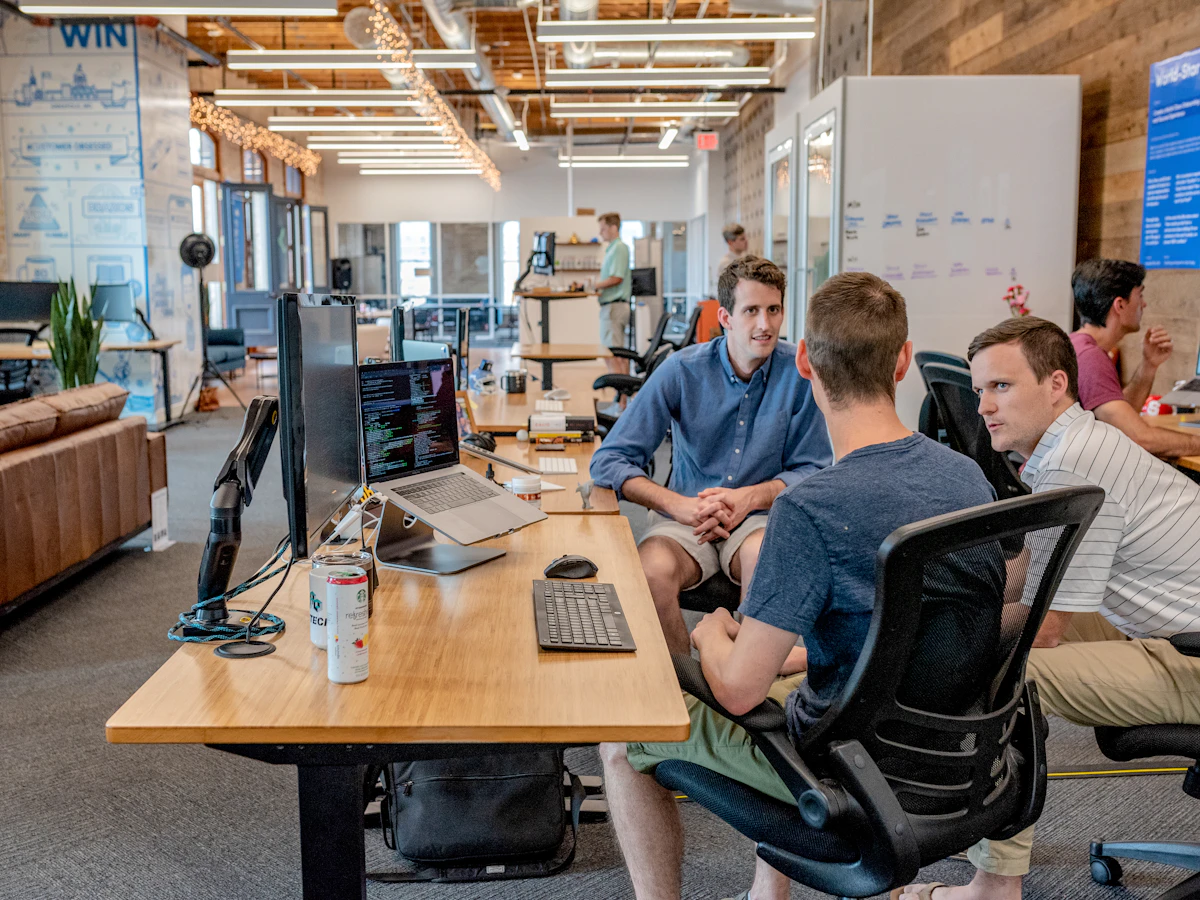
A well-built stack creates multiple income flows that combine into significant financial resilience, protecting you from any single point of failure.
🏛️ Building Income Resilience, One Layer at a Time
We began with the exhaustion of chasing singular gigs. We revealed the alternative: a deliberately designed stack where skills multiply, content builds community, products create leverage, and systems create freedom. This isn't about working harder; it's about designing smarter—applying long-term thinking to your income as you do to your investments.
The economy will have its downturns. Industries will shift. But a well-architected stack gives you multiple pillars of support, each reinforcing the others. Like the 3-Bucket Retirement Strategy diversifies your savings, your income stack diversifies your earning power.
🚀 Stack, Don't Add
Each new endeavor should leverage and strengthen existing assets, not exist in isolation.
🔄 Systemize Early
What you systemize scales. What you manually manage burns you out.
🏗️ Own Your Platform
Build on land you own (your skills, your list, your products) more than land you rent (social platforms).
Your "First Layer" Action (Next 30 Minutes)
Grab paper or open a document. Write down: 1) Your primary skill, 2) One adjacent business skill you could develop, 3) One unusual interest or knowledge area. Look at the intersection. That's the start of your unique stack. That's it. You've just moved from "side hustles" to "stack design."

Income resilience, like any lasting structure, is built layer by layer. Each well-designed component supports the whole, creating stability that withstands economic seasons.


0 Comments